

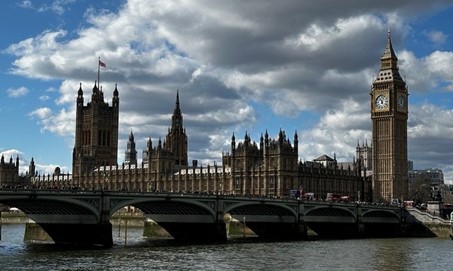
Many have heard the story of an Oxford student who complained to university authorities because examiners had failed to provide the quart of beer due after passing under an unrepealed thirteenth-century statute. The university agreed and served the beer, but fined him £10 for attending without a sword, required by the same statute. This is an old tale of uncertain truth. What is certain is that English law contains many absurd provisions.
Peculiar English laws
The Metropolitan Police Act 1839 supplies much amusement. Its provisions still prohibit, for example:
- shoeing horses in the roadway;
- rolling a barrel along the pavement or carrying a tub, ladder or plank, except for loading or unloading a cart or carriage;
- selling or publicly displaying blasphemous books or singing indecent or obscene songs;
- blowing a horn to gather people for shows or entertainment;
- ringing or knocking at doors without justification;
- “wilfully and unlawfully extinguishing the light of any lamp”;
- flying kites and sliding on frozen streets[1];
- beating doormats before 8 a.m.[2];
- annoying residents by firing a cannon at their houses from within 300 yards[3].
Every Freeman of the City of London, meanwhile, may drive sheep across London Bridge and geese along Cheapside[4]. The tradition continues: actor Damian Lewis drove sheep over Southwark Bridge for charity in 2024[5], while Freeman Benjamin Browning drove more than 100 geese along Cheapside in 2010[6].
A surviving rule on parliamentary dress appears in the 1313 Statute Forbidding Bearing of Armour: wearing armour in Parliament is prohibited[7].
A seemingly neglected, indeed frequently broken, provision is section 12 of the Licensing Act 1872, imposing a £200 fine for being drunk on licensed premises, such as a pub[8]. Pubs, or public houses, are an inseparable English symbol with roots in Britain—the oldest is said to be the eighth-century Ye Olde Fighting Cocks in St Albans. A ban on drunkenness in pubs therefore seems illusory. Enforcement could nevertheless bolster local budgets: a Saturday evening walk through Camden Town would suffice.
Local rules are interesting too. In Bristol, sex beneath a car is prohibited, as is removing a dog from a bed even if it interferes with intercourse[9].
On another topic, medieval law requires Royal Navy vessels arriving at Tower Wharf to pay a toll by giving part of their cargo to the Constable of the Tower of London. In 1381, under Richard II, wine replaced cargo. As naval ships now rarely dock in London, the tradition survives in the Constable’s Dues ceremony. Once a year, a Royal Navy ship arrives; a detachment carries a barrel of alcohol into the Tower and presents it to the Constable with accompaniment from the Band of His Majesty’s Royal Marines. The doors then close and participants consume its contents[10].
Another maritime tradition comes from Edward II’s Prerogativa Regis of 1324, granting the king all whales and sturgeons caught in the kingdom’s waters[11]. Traditionally whales were divided: the head went to the king, the tail to the queen for dress whalebone.
Other fish are regulated too. Section 32 of the Salmon Act 1986 protects salmon, trout, eels and lampreys from poaching. Nothing funny there, except its title: “Handling fish in suspicious circumstances”[12]. Some English people genuinely believe that holding a fish suspiciously is prohibited.
Transport provides more examples. Under the Public Health (Control of Disease) Act 1984, a taxi driver should theoretically ask each passenger about notifiable diseases such as plague or smallpox, because transporting infected persons is unlawful. Until 1976, rules required carrying a sack of oats to feed the horse. They originated in the nineteenth-century London Hackney Carriage Act, when taxis were horse-drawn. “Hackney carriage” still describes the iconic black cab.
Both British and Polish citizens may be surprised that they do not own their passports. British passports state that they remain government property and may be withdrawn at any time. Poland’s Act of 27 January 2022 similarly makes passport documents state property while granting every Polish citizen the right to possess them.
Myths about English law
Many repeated stories have no legal basis. Famous urban legends supposedly allow shooting Welsh people in Chester after midnight, or Scots carrying bows in York on any day except Sunday. Both can rest easy. In 2013 the Law Commission, responsible for identifying obsolete and unnecessary laws, confirmed no such rules exist or ever existed.
Nor is dying in the Palace of Westminster prohibited. The myth rests on a belief that anyone dying on royal property deserves a state funeral. Supposedly bodies were carried outside before death was certified to save the Crown expense. Whatever happened historically, people have died on royal property without state funerals, such as Oliver Cromwell at Whitehall, a royal residence now associated with government offices and access to Downing Street, where number 10 houses the Prime Minister.
It is also untrue that placing a monarch’s postage stamp upside down is treason, that a pregnant woman may urinate in a police officer’s helmet, or that a taxi driver may urinate against the rear right wheel while holding the vehicle with the right hand.
[1] Metropolitan Police Act 1839, section 54.
[4] N. Cawthorne, The Strange Laws of Old England, Brown Book Group, 2015.
[5] Damian Lewis herds sheep over a London bridge.
[7] Statute Forbidding Bearing of Armour.
[8] Licensing Act 1872, section 12.
[9] N. Cawthorne, The Strange Laws of Old England, Brown Book Group, 2015.