The deposit return scheme officially took effect on 1 October. For several months, the government had been informing consumers and businesses about the new regulations, bottle return rules and the new appearance of packaging with its distinctive marking. Nevertheless, there are reports of no visible changes in shops, poor organisation and infrastructure unprepared for the scheme. Not all shops have reverse vending machines, and some producers are already trying to avoid the new statutory obligations. Natural questions therefore arise: when will the scheme actually take effect, are reverse vending machines available and where, and how is Poland coping with its first days under the new arrangements?
The transitional period
Many shops have no packaging bearing the new markings because a transitional period runs until the end of the year, allowing stocks of packaging not yet covered by the scheme to be exhausted. In practice, new scheme packaging should appear gradually. Full implementation will not occur until 1 January 2026, although “old” packaging placed on the market before that date may remain in circulation.
Reverse vending machines
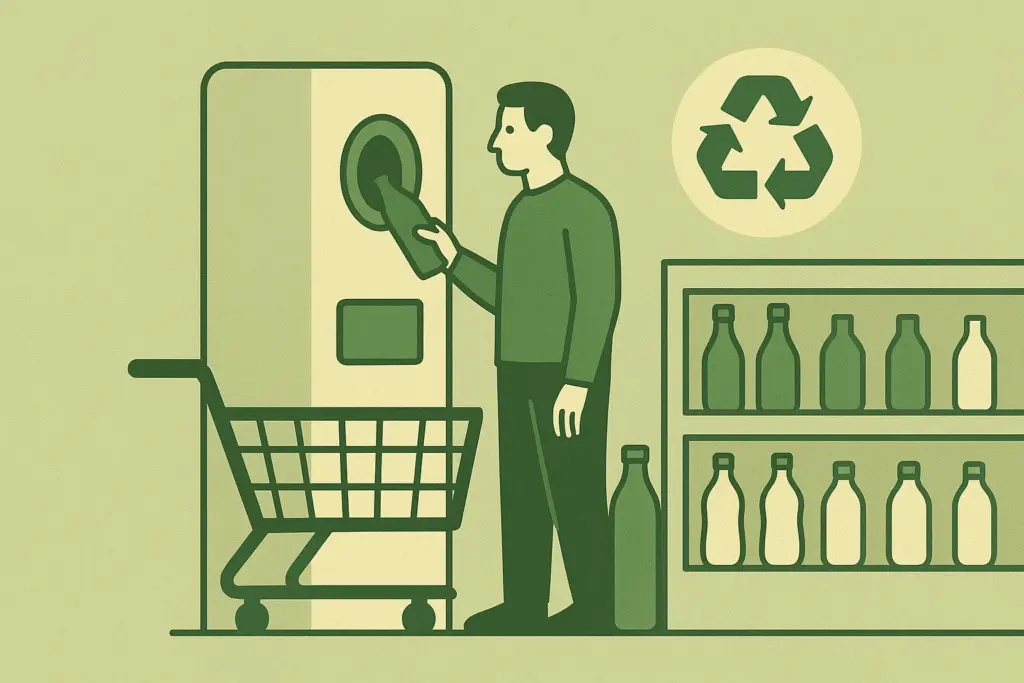
Another element is reverse vending machines, which allow consumers to return bottles and reclaim deposits themselves. Press reports suggest that the first days have been fairly chaotic. Some shops are not fully ready and machines are still being installed. This is entirely understandable from a legal and commercial perspective, but may confuse consumers wondering why the heavily advertised scheme is not working.
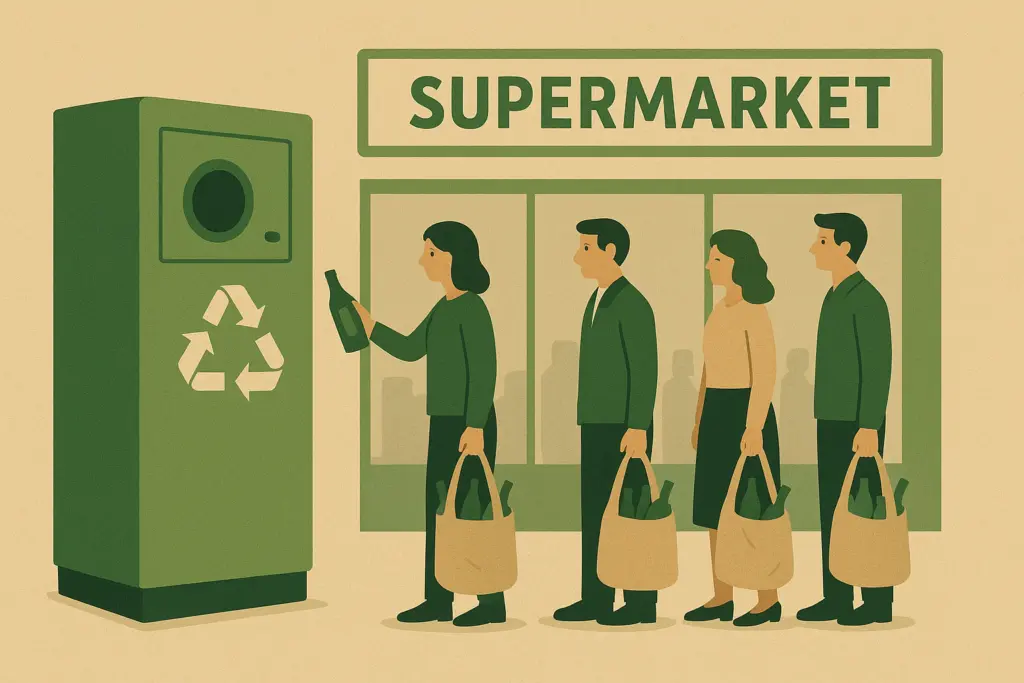
According to media reports, consumers queued at machines in some shops with bags of packaging to return—bottles not covered by the scheme and on which no deposit had been paid. Some such events were associated with campaigns by retail chains which, to prepare customers for the changes and collect plastic waste, introduced machines accepting non-scheme plastic packaging for a symbolic PLN 0.10 payment.
Examples of “circumventing” the rules
Attempts to avoid statutory obligations were another widely discussed issue in the scheme’s first days. One mineral water producer announced that it would sell water in 3.001-litre plastic bottles, a volume excluded from the scheme. Other producers thought of making drinks in packaging outside the scheme, such as cartons, or even tried reclassifying products as dairy products.
The problem facing small shops
The scheme presents a challenge for small shops that may lack space and funds for reverse vending machines. Their absence brings further duties and problems, such as storing bottles in bags and manually refunding deposits. These issues could discourage small businesses from participating, potentially costing them customers who choose outlets offering returns. In smaller municipalities, distances to collection points may also be problematic. Mobile collection points, such as vans accepting bottles and refunding deposits, are one possible solution. Appropriate logistics are key to the scheme’s operation and support for small shops, enabling them to participate for cans and PET bottles as well, alongside adequate financing of collection costs by operators.
Public awareness
Recent research[1] indicates that approximately 85.2% of Poles have NOT used the scheme, unsurprising given the planned transitional period. The figures on knowledge of the changes are more surprising. People over 55 and residents of large urban areas showed the greatest awareness; younger people aged 18–24 and residents of smaller towns and communities showed less. Research[2] also found that 48% of respondents knew about the scheme, 16% were very familiar with it, and just 6% said they did not know its rules. Actual implementation and operation after the transitional period appear likely to be crucial to its development and public awareness.
Conclusion
These are only the first weeks of a new scheme. The situation is developing continually, alongside public awareness. It may change repeatedly, with new problems and government information emerging. The deposit return scheme should therefore be monitored continuously, as the coming weeks will be crucial to its future operation.
[1] See Only a small group of customers have used the new deposit return scheme (in Polish).
[2] See Poles support the deposit return scheme: most of us say “yes” (in Polish).