
The scheme’s first test
Poland’s deposit return scheme has applied to PET plastic bottles and metal cans since 1 October 2025, and to glass bottles since 1 January 2026. Its introduction aimed to increase recycling of beverage packaging and achieve EU separate collection targets.
Over the last ten months, we have watched new packaging bearing the deposit marking gradually appear in shops and consumers, beverage producers and distributors adapt to the new conditions. At DJP, we prepared an accessible guide to the legal aspects of the scheme[1], followed over subsequent months by blog articles examining specific issues. Today, the scheme can be said to have passed its first major test. It is nevertheless difficult to say unequivocally whether its initial period was a success or a failure. Billions of packages have entered the scheme, and Poles quickly adopted the habit of returning bottles. Yet media reports of financial, organisational and legislative problems continue. Consumers, businesses and local authorities alike are demanding changes.
Collection volumes and new habits
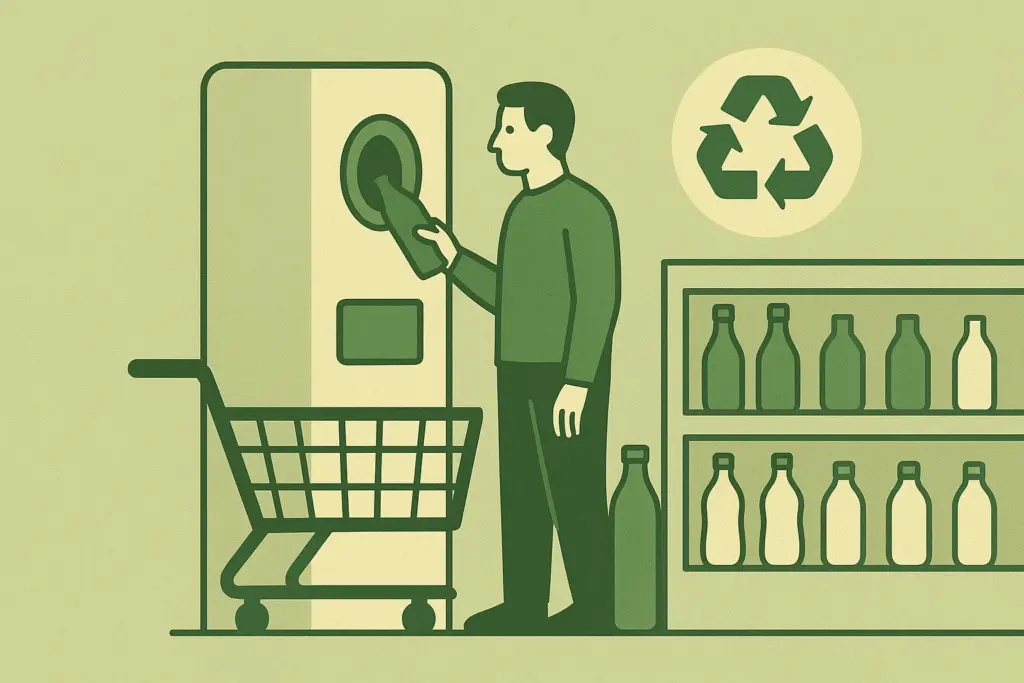
Government figures show that 2.3 billion cans and bottles bearing the deposit marking were returned between October 2025 and June 2026. As many as 87% were returned through reverse vending machines[2]. According to a Reloop report[3], other EU countries achieved target collection rates only in the second year of operation. The proportion of deposit-bearing bottles returned relative to those purchased can therefore be expected to improve.
The government reports that success lies not only in return volumes but also in expanding infrastructure. The Ministry of Climate and Environment states that around 64,000 collection points now operate in Poland, 54% of them small retail outlets[4]. These points allow packaging to be returned close to everyday shopping locations.
The scheme has also affected shopping habits. Recent months have seen a marked increase in purchases of larger water containers, particularly 5-litre ones. According to market monitoring centre data (CRM), sales of syrups for home carbonation machines also rose by 277% in the first half of the year[5]. These syrups offer an alternative to sweetened drinks in deposit-bearing bottles. Some consumers are therefore trying to avoid buying drinks in deposit packaging. Paradoxically, this may be an unintended success: fewer plastic containers circulate overall, reducing environmental pressure.
Challenges for businesses
Despite some successes, the last ten months have exposed numerous gaps and irregularities. Reports indicate that the Chief Inspectorate for Environmental Protection has received 104 notifications about the scheme and four complaints concerning regional inspectors’ inspections of an entity obliged to operate it[6]. The inspectorate states that complaints most often concern machine failures and staff unwillingness to settle deposits manually. Reports also include refusal to accept scheme packaging and inability to redeem a voucher the same day because it has not yet been registered in the shop’s system. The inspectorate stresses that most reports concern isolated incidents.
IBRiS survey findings are also unwelcome news for the government: 50.5% of Poles view the scheme negatively[7]. Business organisations are critical too, citing financial, organisational and sanitary problems. Retailers principally object to handling payments that are too low. The Entrepreneurs’ Council states that the scheme does not cover actual costs. Shops currently receive about PLN 0.15 per package collected by machine, whereas businesses put the actual break-even level at PLN 0.33. Manual collection is compensated at PLN 0.11 per package, although actual costs reportedly reach PLN 0.31. Costs also include investment in a reverse vending machine, whose price may exceed PLN 70,000.
The Council also highlights sanitary issues. Shops must store large quantities of dirty packaging, causing unpleasant smells, more insects and greater bacterial risks. It also points to a lack of clear sanitary guidance, potentially creating uncertainty during inspections and increasing the risk of penalties.
Another issue is circumvention. Plastic cans have recently become more popular[8]. Combining plastic and metal, they fall outside the scheme. Producers exploit this gap by offering them as an alternative to metal cans.
Directions for change
Amendments are now being announced. The most likely change is extending the scheme to further bottle types. Reports most often indicate that the Ministry of Climate and Environment is considering single-use glass bottles. Deputy climate minister Anita Sowińska said possible legislative work would begin in autumn[9]. She also stated that the ministry is not working on bringing milk packaging back into the scheme. The original legislation adopted in 2023 included milk and milk drink packaging, but it was excluded in the 2024 amendment. The government also announces more return points, in pursuit of EU beverage packaging collection targets of 77% by 2028 and 90% by 2029.
The first ten months have exposed both good and bad aspects of the scheme. Judged against other EU countries and their implementation processes, however, Poland is following a comparable course. European reports suggest separate collection will increase. Government information in the coming months is worth monitoring because potential changes may significantly affect all participants, both consumers and businesses.
Sources and references
[1] DJP deposit return scheme knowledge centre.
[2] Deposit return scheme – Ministry of Climate and Environment (in Polish).
[3] Global snapshot: Deposit return system performance around the world – Reloop Platform.
[4] Deposit return scheme accelerates: 2.3 billion packages returned (in Polish).
[5] How Poles avoid reverse vending machines: sales surge (in Polish).
[6] Deposit scheme complaints flood officials (in Polish).
[7] Deposit return scheme under fire (in Polish).
[8] Plastic cans bypass the scheme: calls for changes (in Polish).
[9] A wave of complaints: customers suddenly cannot obtain refunds (in Polish).